An editorial design project created as part of the research initiative “Design as a means of preventing childhood obesity” at Universidade Lusofona. The publication combines hand-drawn illustrations with food-inspired visuals to teach children about healthy eating through engaging, friendly design.
Porto, Portugal / 2023
Publication
for Children

Project completed as part of the Erasmus+ program
Universidade Lusofona, Porto, Portugal
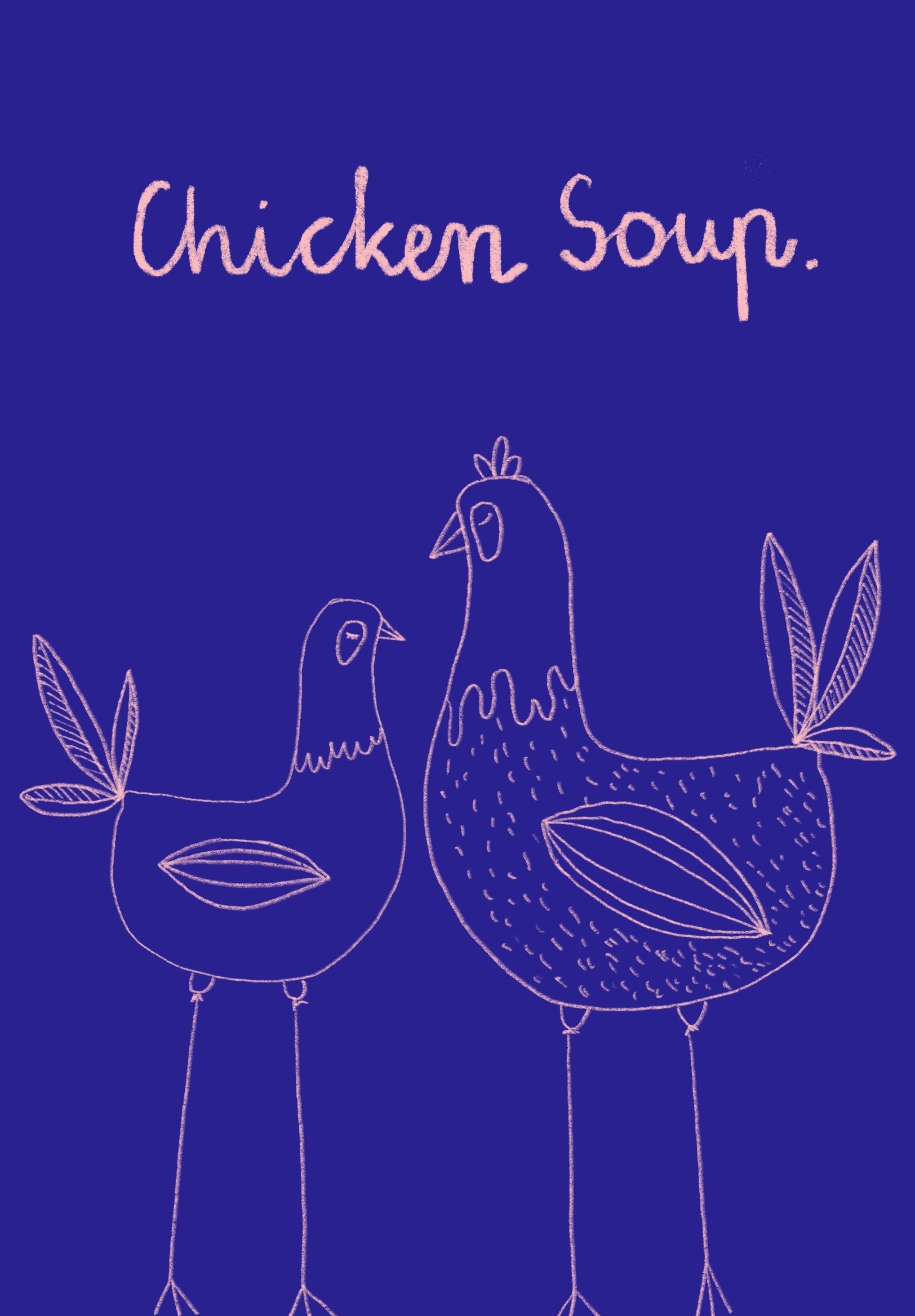
English cover
Chicken Soup
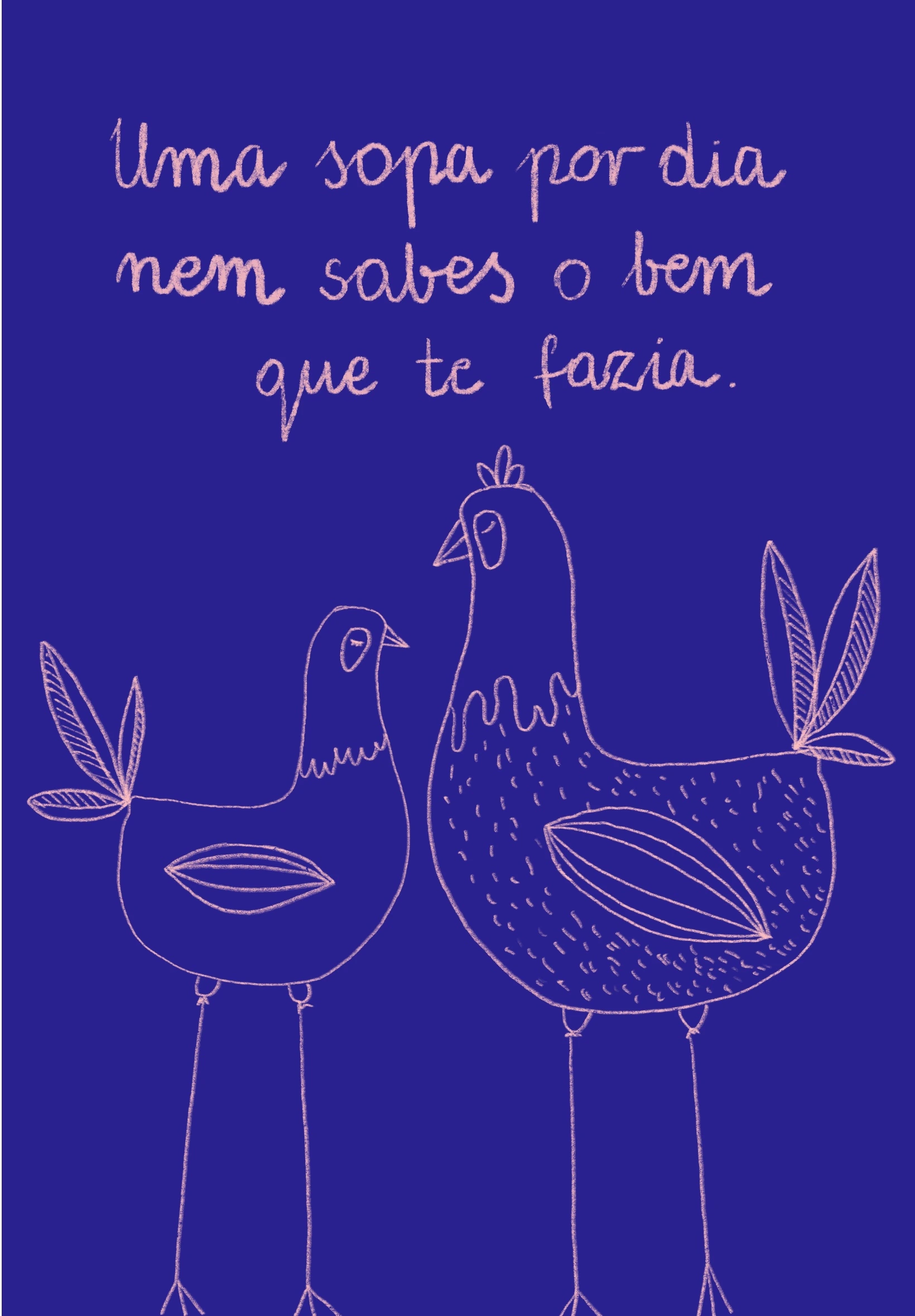
Portuguese cover
Uma sopa por dia
/01. Cover illustrations
The cover illustrations feature hand-drawn characters: friendly chickens in a naive, approachable style, in vivid indigo and soft pink.
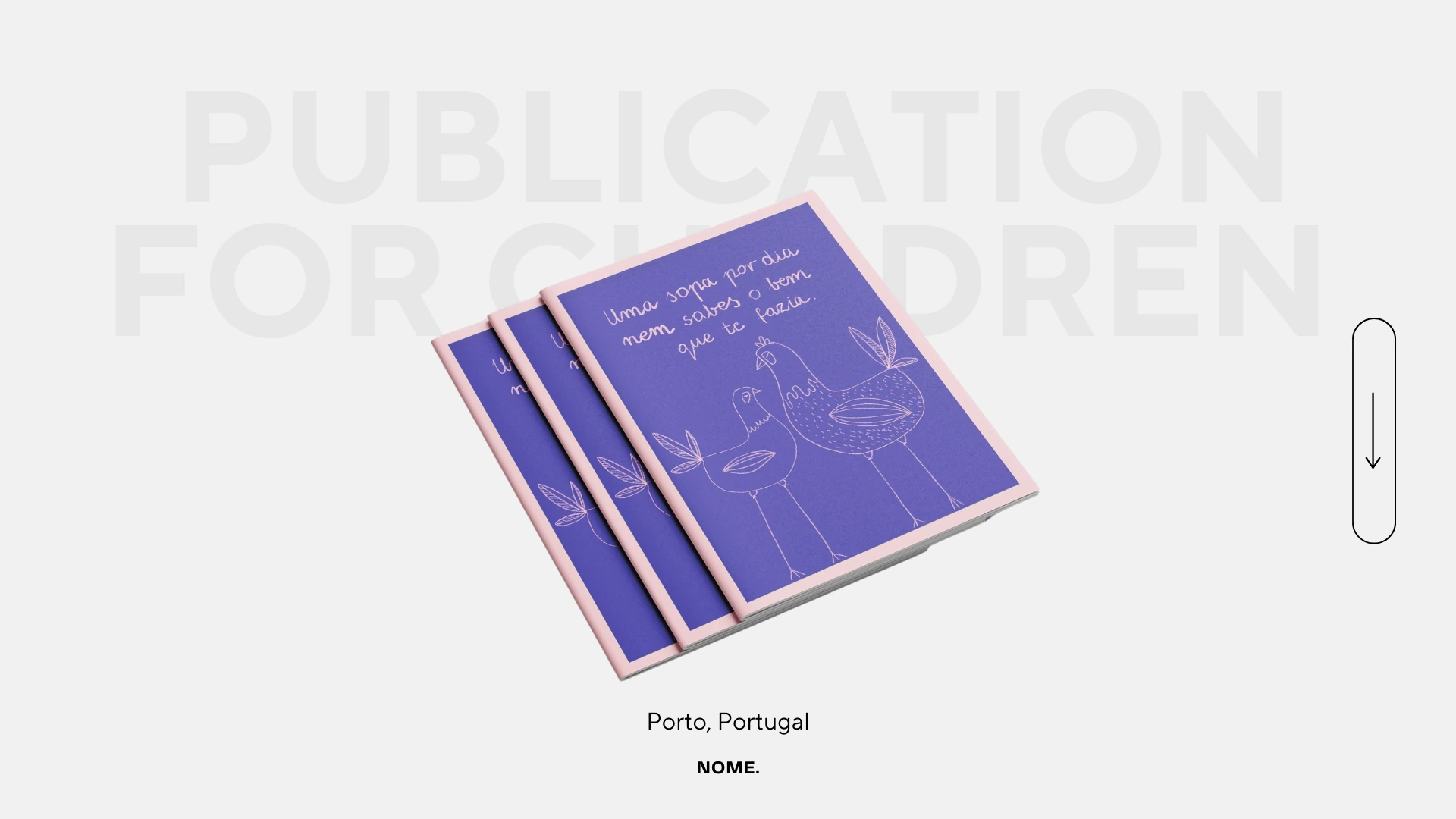
Chicken soup
Portuguese proverb
“Uma sopa por dia, nem sabes o bem que te fazia”
(A soup a day, you have no idea how good it would do you) sets the tone for the publication’s educational mission.
/02. Design approach
Design principles
Color as communication
A food-inspired color palette designed to evoke warmth, appetite and joy. Each spread uses its own color system tied to specific ingredients and nutrition topics.
Typography for young readers
Hand lettering paired with carefully chosen typefaces optimized for legibility in early childhood. Large x-heights, open counters and generous spacing guide young eyes across the page.
Typographic grid
A structured modular grid provides visual rhythm and hierarchy while keeping the organic, playful character that children’s publications need. The grid adapts smoothly to different types of content.
Child-centered illustration
Hand-drawn illustrations in a naive, approachable style that speaks to children. The characters are friendly and relatable, so the educational content on nutrition feels more like a story than a lesson.
/03. Visual system
Color
palette
The palette comes straight from food: warm yellow from grains and pasta, fresh green from vegetables, carrot orange from root vegetables, while the main indigo paired with powder pink forms the cover system. The colors are meant to stimulate appetite and build positive associations with healthy eating.
/04. Research context
Design against childhood obesity
The publication is part of the research project “Design as a means of preventing childhood obesity” from the Hei-Lab research center at Universidade Lusofona, developed in collaboration with the Pediatrics Department of Hospital Pedro Hispano. The project was approved on May 12, 2019 by the Ethics and Health Committee and the HPH Administration.
01
02
03
04
/Multidisciplinary team
Carla Cadete
Design
Andreia Pinto de Sousa
Usability and UI
João Alves de Sousa
Video games
Inês Aleixo
Sport
Lucimere Bohn
Sport
Sandra Abreu
Nutrition
Rafaela Rosário
Health / Nursing
Ana Rita Farias
Psychology
/05. Educational mission
Learning with illness
Design for health
The publication serves as an educational tool in the “Learning with Illness” program of the Pediatrics Department at Hospital Pedro Hispano. It combines medical knowledge with child-friendly design, turning complex nutrition concepts into engaging visual stories.
Curriculum integration
This exercise brings together all the design skills from previous semesters, image, typography, color, layout and rhythm, applied specifically to an artifact for children. Mastering the typographic grid was essential to keep the visuals clear.
Impact and accessibility
A practical guide designed for parents and preschool educators. Every design decision, from color choice to illustration style, was made with the end users in mind: children aged 3 to 6 and their caregivers.
/Note
The project was developed as part of an academic research program at Universidade Lusofona in collaboration with Hospital Pedro Hispano in Porto. The research was approved by the Ethics and Health Committee on May 12, 2019. All illustrations and design work are original. The project is not distributed commercially.