Engineering thesis: 2024
Concept of a leisure yacht for people with disabilities
Year
2024
Project type
Engineering thesis
Discipline
Industrial Design
Tools
Autodesk Fusion 360
About the project
Sailing without barriers
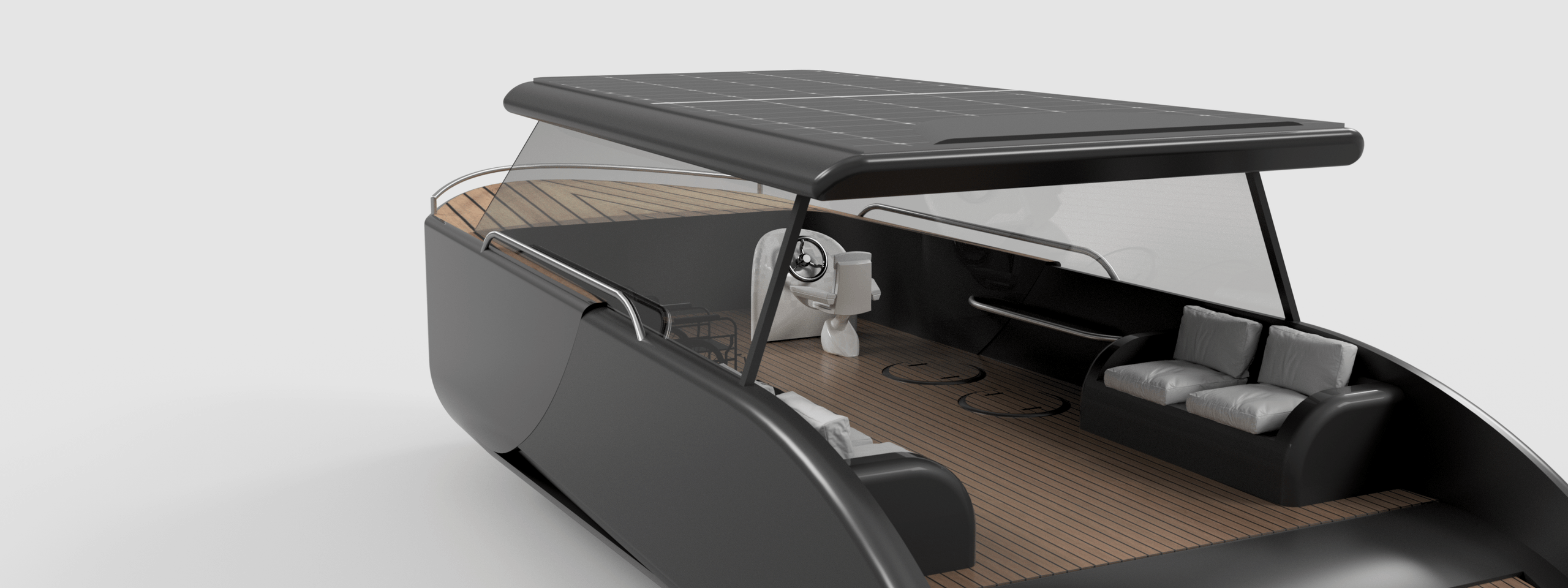
The project responds to the lack of boats adapted for people with mobility impairments. The goal was to design a leisure yacht concept that is fully accessible while staying aesthetically in line with contemporary marine design.
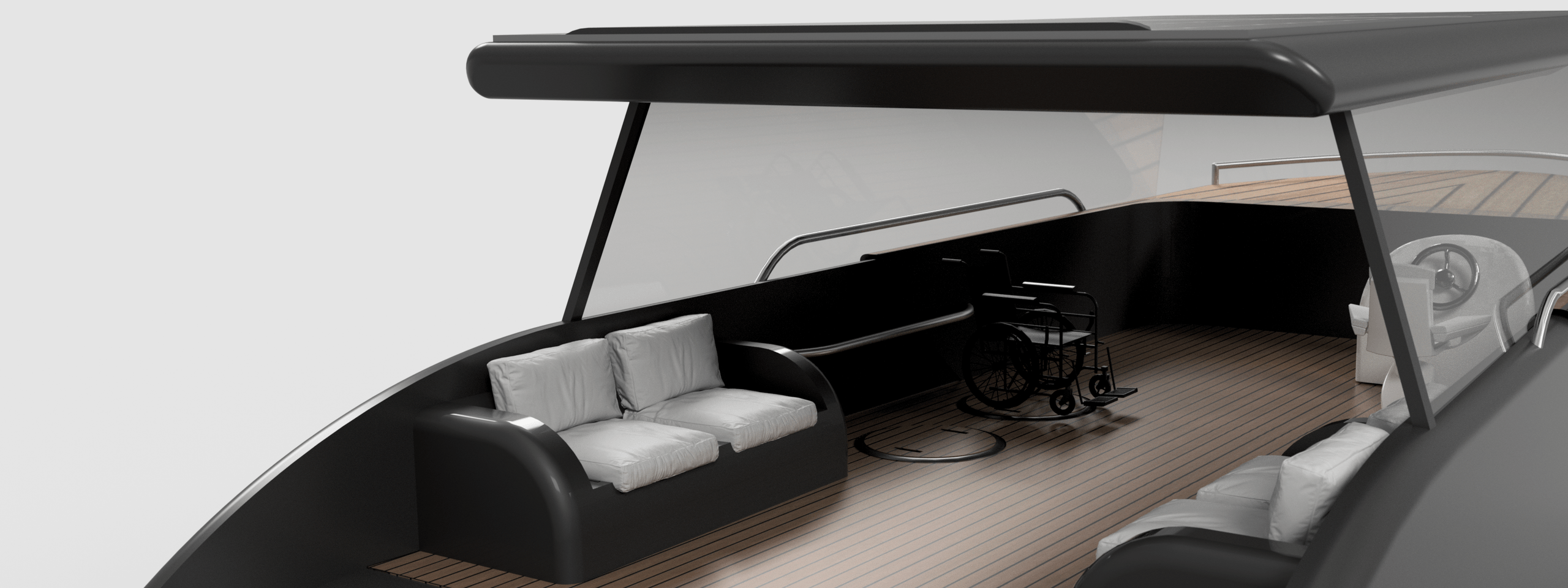
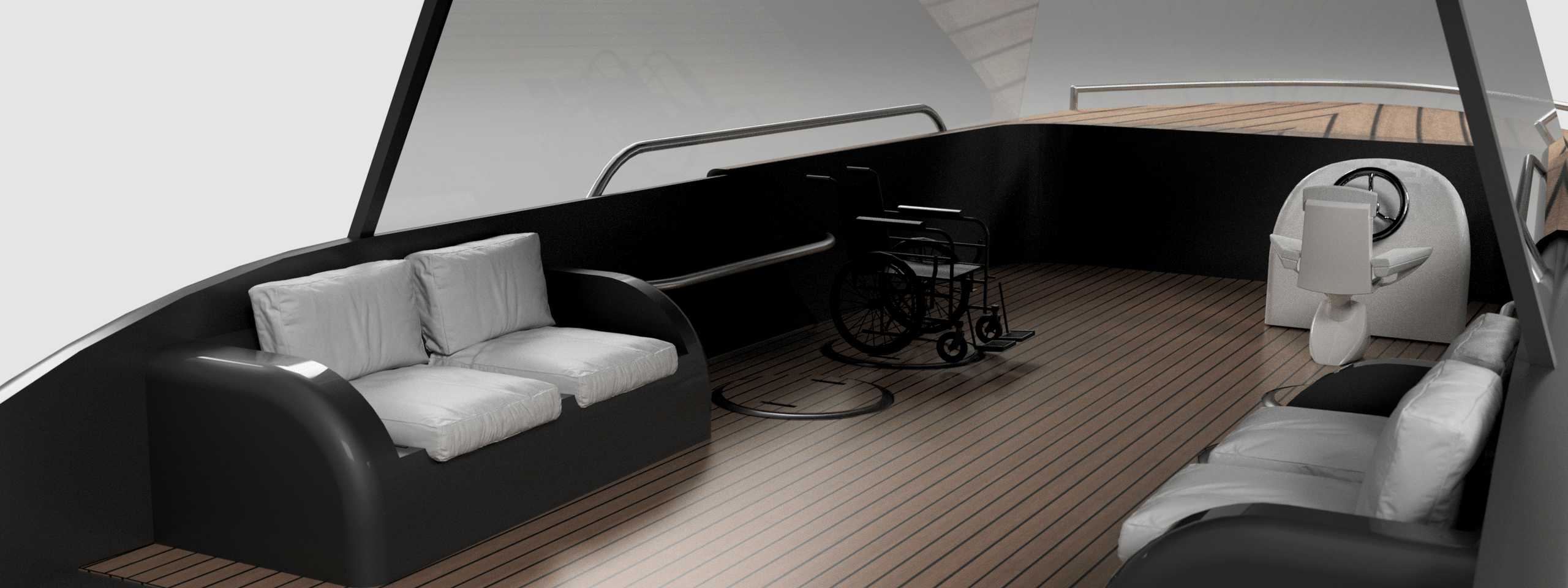
The core idea was to build the accessibility features into the form of the boat, so that they feel like a natural part of the design rather than a visible compromise. The wheelchair has a dedicated parking spot with a securing system, and the whole deck serves all passengers at once.
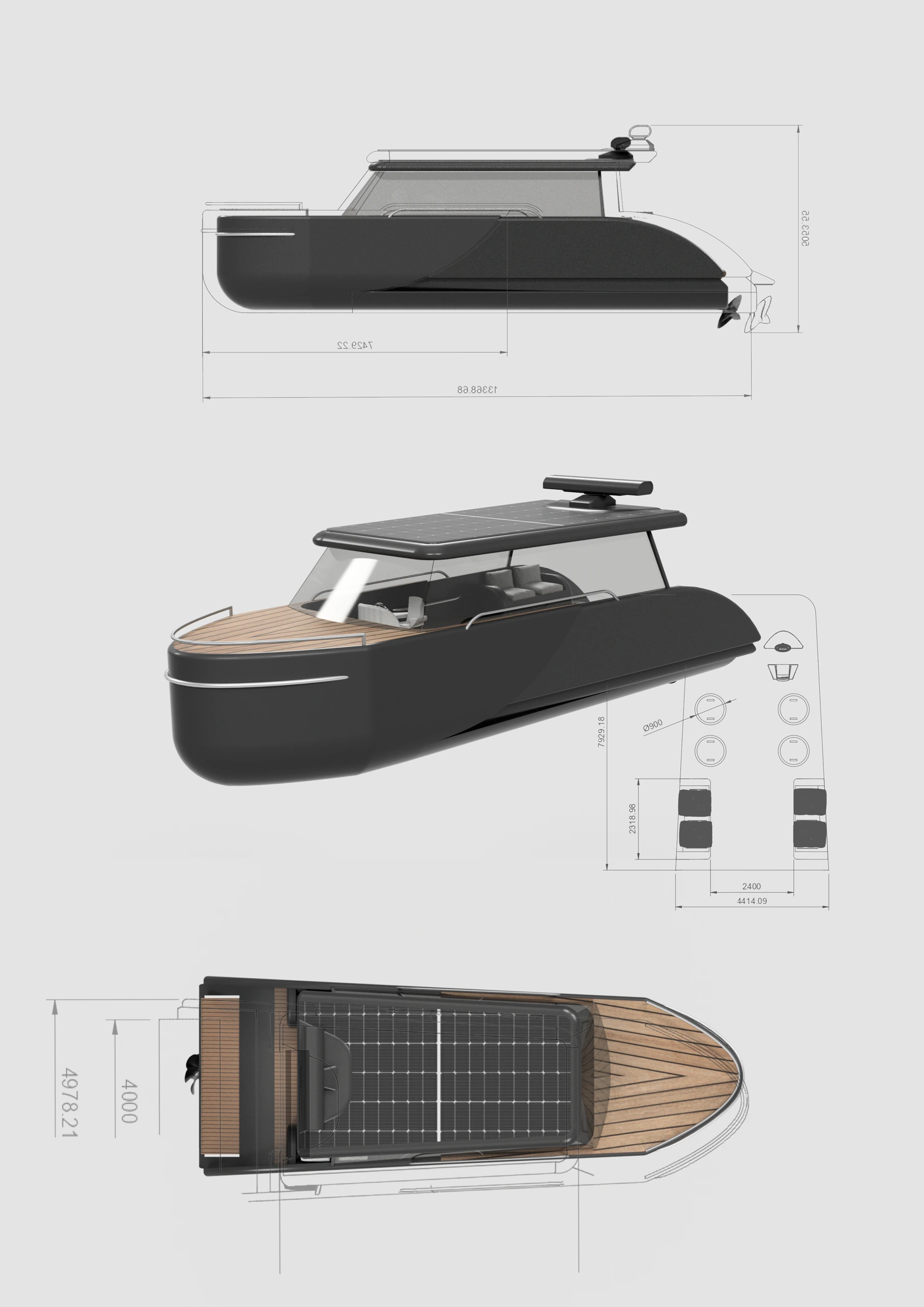
The project was done entirely in Autodesk Fusion 360: both the CAD modeling and the rendered visualizations were made there. The technical documentation includes assembly drawings, orthographic projections and detailed dimensional specifications.
Key goals
Full accessibility for wheelchair users
Step-free boarding straight from the quay
Deck turntables for changing direction without turning the wheelchair
Standard-compliant maneuvering space inside the cabin (Ø950 mm)
Electric, zero-emission drive with photovoltaic panels
Opening roof that turns the cabin into an open deck
Helm station ergonomics adapted to a wheelchair user
Design solutions
Accessibility
first
Step-free boarding
A lowering stern platform lets wheelchair users roll straight onto the deck, with no need to transfer.
Deck turntables
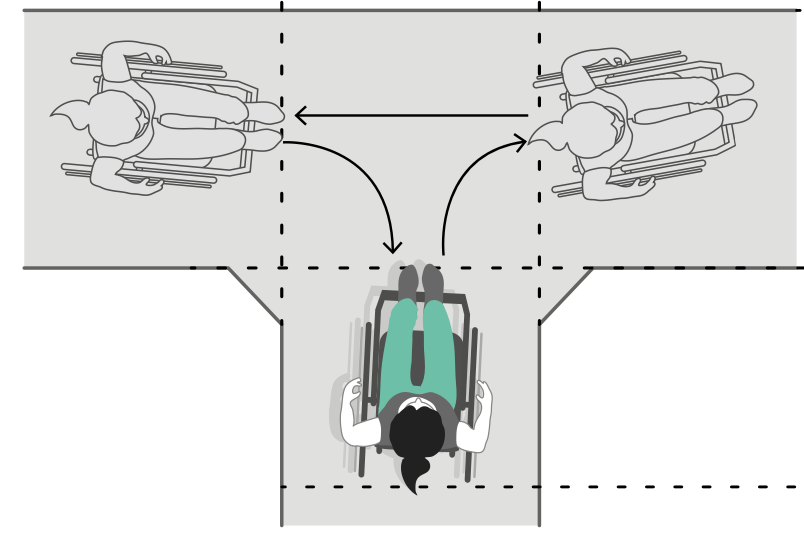
Turntables are installed at the key points of the user’s route: round rotating platforms set into the floor that change the wheelchair’s direction without the user having to turn it.
Maneuvering space
The deck is designed around a standard turning space: a Ø950 mm circle allows the wheelchair to maneuver freely at every key point of the cabin.
Helm ergonomics
The control console sits at a height suited to a seated person. Buttons and display are within easy reach from the wheelchair.
Photovoltaic panel
The roof carries solar cells that power the electrical system and charge auxiliary systems without an external power source.
Electric drive
A quiet, zero-emission electric drive reduces vibration and noise, which matters especially for the comfort of people with disabilities.
Opening roof
A folding roof panel opens the cabin completely, turning an enclosed space into an open deck, accessible without leaving the wheelchair.
Ergonomic analysis
Turntables & maneuvering space
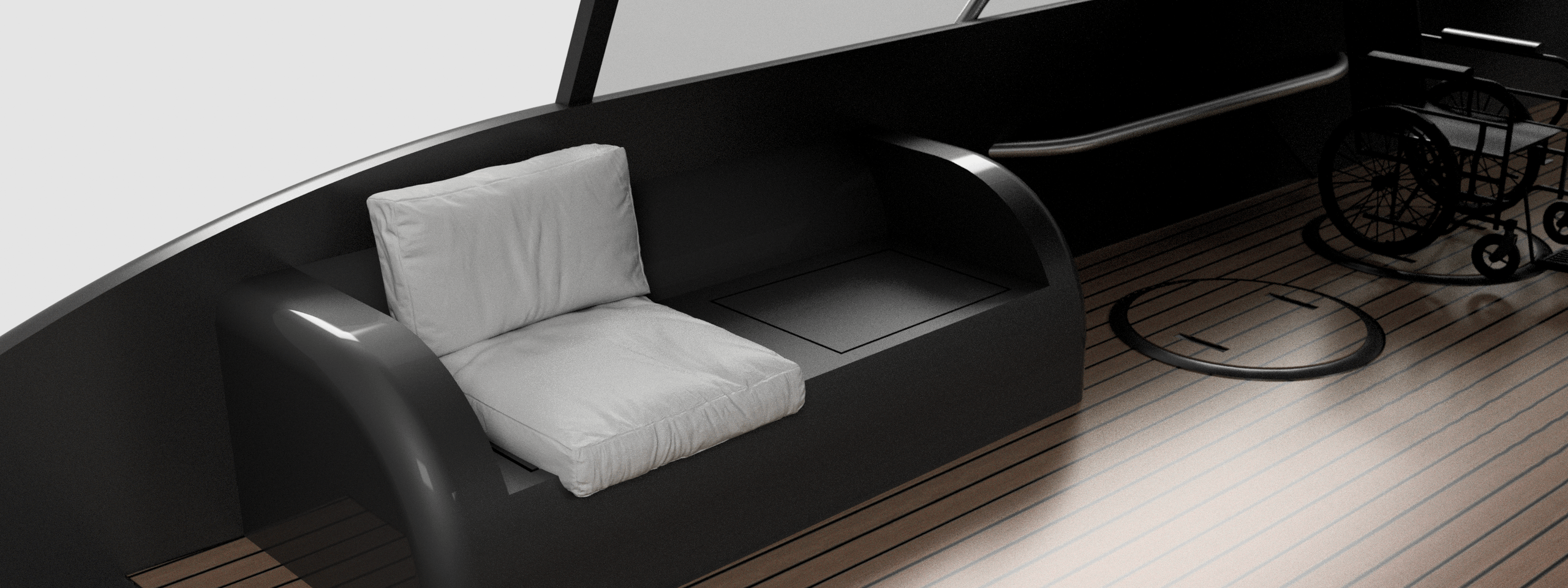
At the key points of the user’s route, at the entrance, at the wheelchair parking spot and at the helm station, I designed deck turntables: round platforms set into the floor on which the wheelchair turns freely, without the user having to turn it themselves.
This drastically reduces the physical effort needed to move around the deck and removes the need for repeated reversing maneuvers that a tight space would otherwise require.
In line with accessibility standards, a turning circle with a minimum diameter of Ø950 mm is kept at every point. The diagram shows the layout of the turntables and turning areas on the deck plan.
A fixed securing system at the parking spot (floor anchors + a stabilizing strap) keeps the wheelchair safe during the trip, even in rough water.
Technical parameters
Specifications
Back to